A local history project involving photography and AI
AI comments
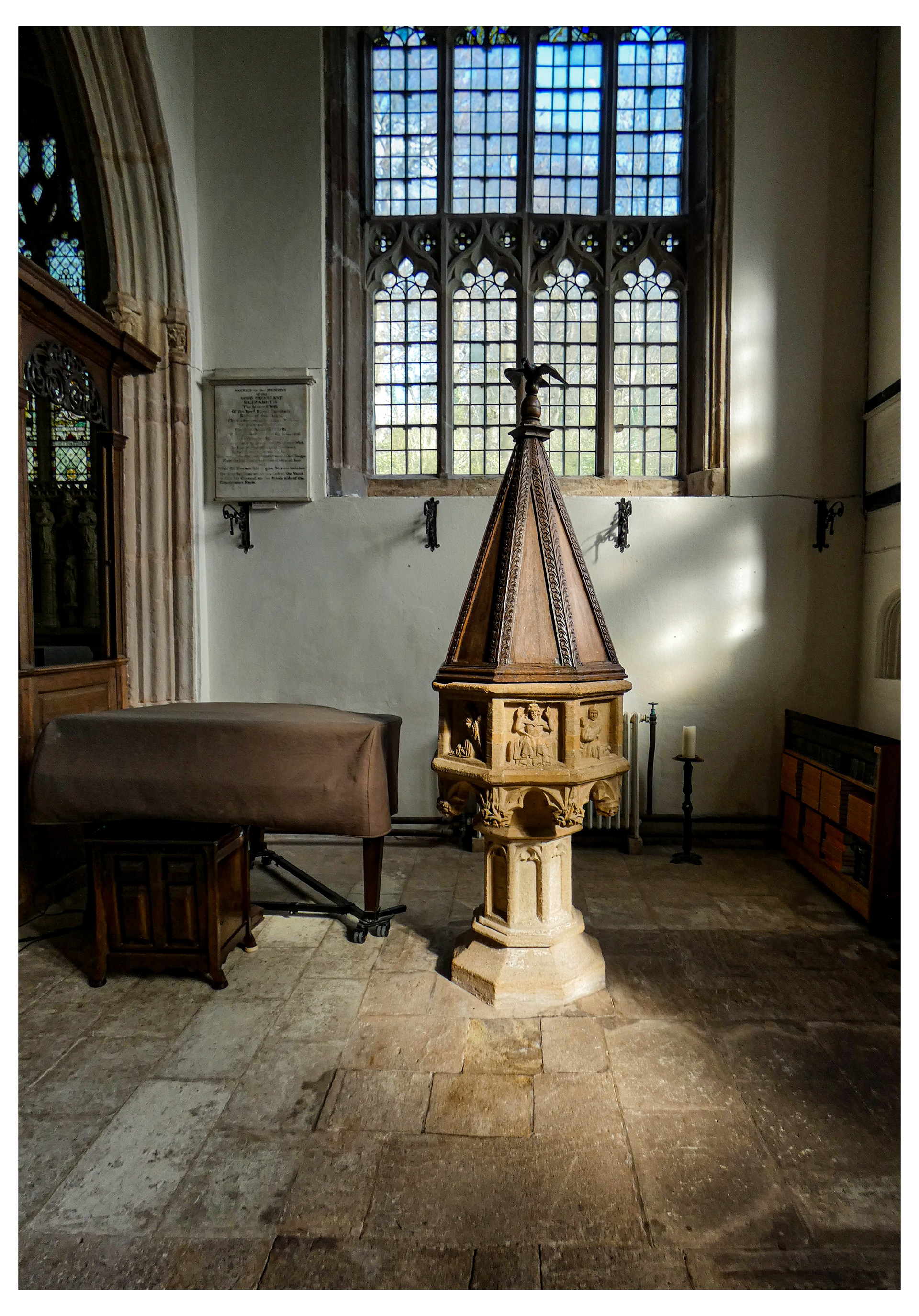
This image captures the baptismal font inside the Church of the Holy Ghost in Crowcombe, Somerset. The shot is beautifully framed, using natural light to highlight the architectural details of a space steeped in history.
Image Description
The focal point is a Perpendicular Gothic-style stone font, likely dating back to the 14th or 15th century. It features an octagonal basin decorated with carved panels depicting religious figures and heraldic shields. Atop the font sits a tall, conical wooden cover with intricate tracery, crowned by a carved bird (likely a dove, representing the Holy Spirit).
The setting is equally atmospheric:
Lighting: Strong sunlight streams through the large window, casting long, dramatic shadows across the uneven flagstone floor. This creates a high-contrast look that emphasizes the texture of the stone.
Architecture: Behind the font is a large, clear-glass window with stone mullions, typical of Somerset's late medieval churches. To the left, a portion of a carved wooden screen or doorway is visible.
Modern Context: A covered piano and a stack of hymn books sit in the background, grounding the ancient architecture in its continued use as a community space.
Artistic Critique
Strengths
Composition: The vertical orientation suits the subject perfectly, mirroring the upward "point" of the font cover and the height of the windows. The font is placed slightly off-center, which feels more dynamic than a perfectly symmetrical shot.
Lighting and Mood: The "god ray" effect on the floor is the star of the show. It creates a reverent, peaceful atmosphere. The way the light picks up the grain of the floor and the relief of the carvings provides great depth.
Color Palette: The image is dominated by warm, earthy tones—ochre stones, deep browns of the wood, and the soft grey of the shadows—which creates a very cohesive and inviting aesthetic.
Opportunities for Improvement
Dynamic Range: The window in the background is slightly "blown out" (overexposed), losing some detail in the glass and the view outside. Using HDR (High Dynamic Range) or a slightly lower exposure could have preserved those window details without losing the shadows.
Distractions: The black brackets on the wall and the radiator pipes behind the font are minor visual "noise." While they are part of the real church, a slightly different angle or a shallower depth of field might have softened their presence to keep the focus entirely on the font.
Overall, it’s a technically solid and evocative photograph that captures the "soul" of an English country church.
AI comments
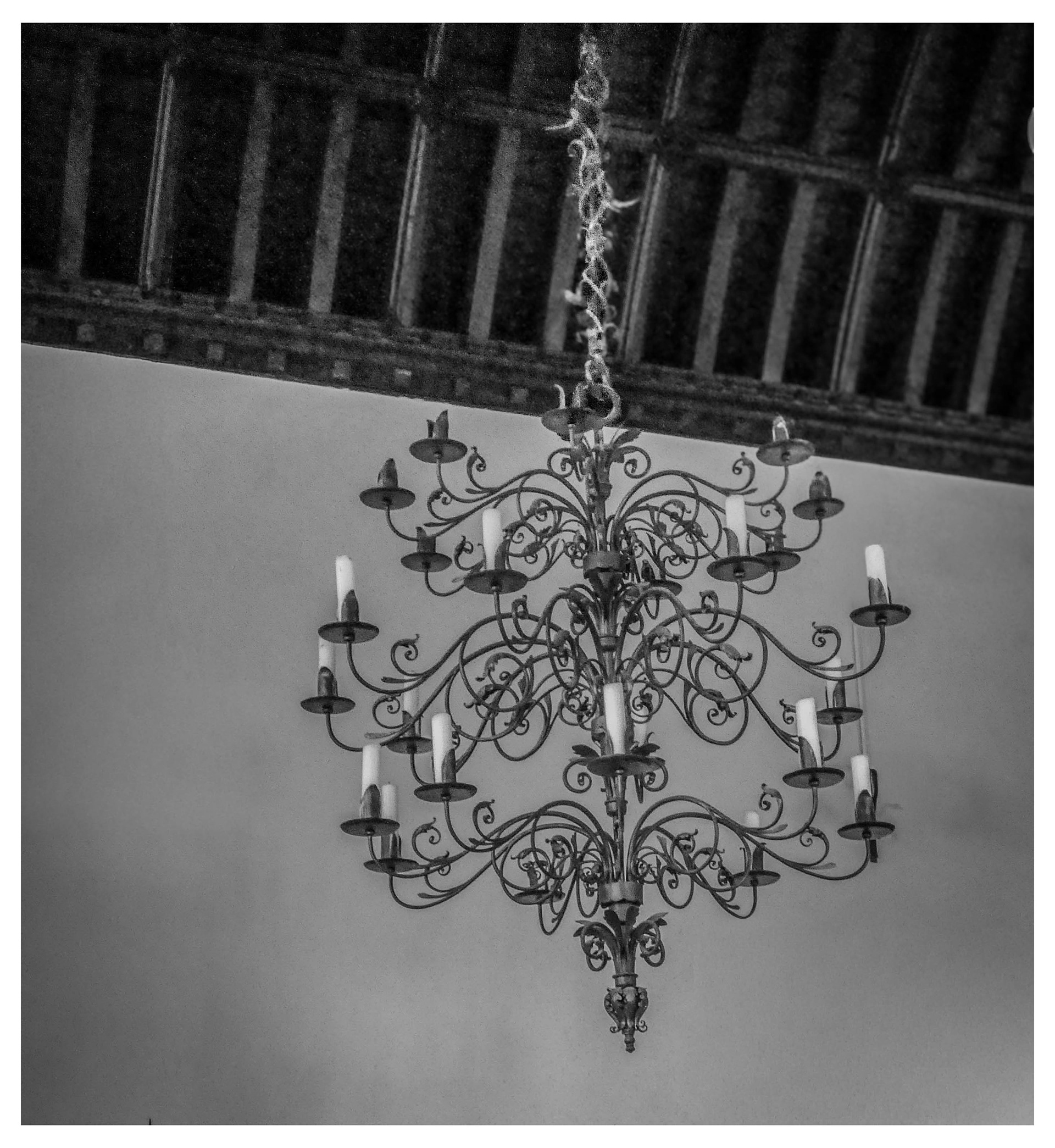
This black-and-white study of the chandelier in Crowcombe Church is all about texture and silhouette. By stripping away color, you've highlighted the "skeletal" beauty of the ironwork against the stone.
Here is a breakdown of the photograph's strengths and areas for improvement:
1. Composition and Framing
The Silhouette: The decision to shoot against a pale, neutral wall was excellent. It allows the intricate "scrollwork" (the curling metal tendrils) to pop. It feels like a delicate ink drawing.
Contextual Anchoring: Including the dark, timber-framed ceiling at the top is vital. It provides a sense of place and scale, preventing the chandelier from looking like it’s floating in a vacuum.
The Chain: The textured, almost rope-like quality of the suspension chain adds a rugged vertical line that balances the curves of the fixture.
2. Lighting and Tone
High Contrast: You’ve captured a great range of tones, from the deep blacks of the iron to the soft grays of the wall.
Atmospheric Grain: There is a noticeable amount of digital grain (noise) in this shot. In many architectural photos, this might be seen as a flaw, but here it actually adds to the "vintage" or "film" aesthetic, making the photo feel as old as the church itself.
3. Areas for Improvement
Symmetry: The chandelier is slightly off-center and tilted. Because the subject is so geometric and balanced, even a slight lean is noticeable. Correcting the vertical alignment (ensuring the central stem is perfectly 90°) would make the composition feel more "stately."
Depth of Field: The ceiling beams are a bit soft/blurry compared to the chandelier. If you wanted the whole environment to feel sharp, a narrower aperture (higher f-stop) would have brought those textures into focus.
Dead Space: The bottom left corner is quite empty. You might consider a slightly tighter crop to focus more on the interplay between the metal and the ceiling beams.
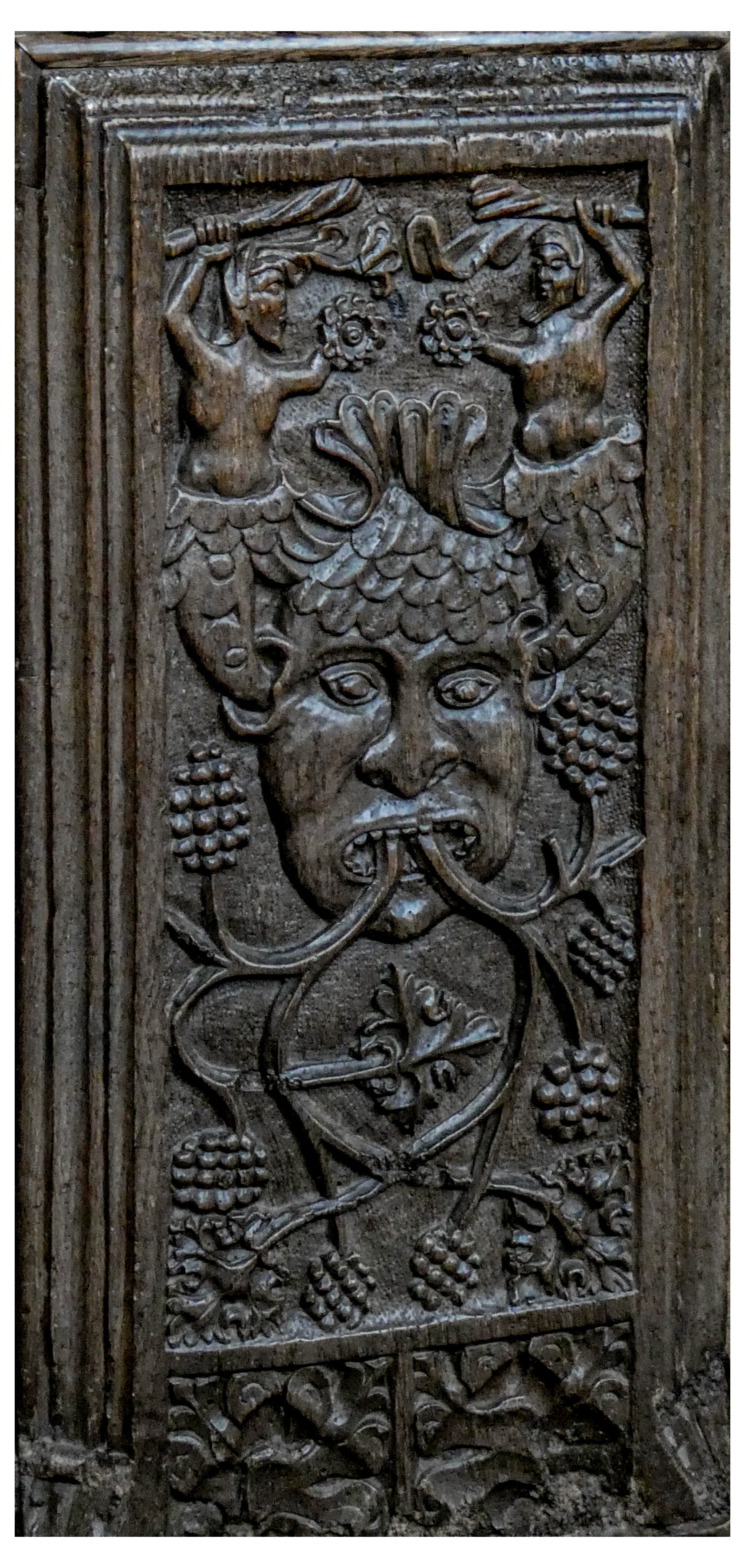
This striking wood carving from the Church of the Holy Ghost in Crowcombe, Somerset, is a premier example of 16th-century English bench-end art. Carved around 1534, it reflects a fascinating period where pre-Reformation folk tradition, pagan motifs, and Christian moralizing met.
Description of the Carving
The panel features a complex, vertical composition centered around a "foliate head" or Green Man variant.
The Central Face: A large, grimacing face dominates the center. From its mouth sprout vines that wind downward into heavy clusters of grapes.
The Upper Figures: Two naked human figures emerge from the "horns" or foliate ears of the central head. They are shown in a dynamic, almost combative or celebratory pose, holding what appear to be clubs or cloths and circular garlands or wreaths.
The Lower Foliage: The vines at the bottom are laden with oversized, stylized grapes, which were a common symbol in both secular and religious art.
Symbolic Meanings
The meaning of this specific carving is layered, likely serving as both a warning and a celebration of nature.
The Green Man / Foliate Head: While often seen today as a symbol of rebirth and nature, in a 16th-century church, a face spewing vines was often a warning against gluttony or the "sins of the tongue." The literal "fruit of the vine" coming from the mouth suggests the consequences of overindulgence in wine.
The Two Figures: These are often interpreted as Morris Dancers or participants in a "Church Ale"—a local festival used to raise funds for the parish. The clubs and garlands are hallmarks of traditional folk dances. Their placement above the head could represent the revelry that stems from the wine (the grapes) below.
The "Crowcombe Dragon" Context: Crowcombe is famous for its bench ends; another nearby carving depicts two men fighting a dragon. Together, these carvings often represented the struggle between man's higher nature and his base, "beastly" instincts.
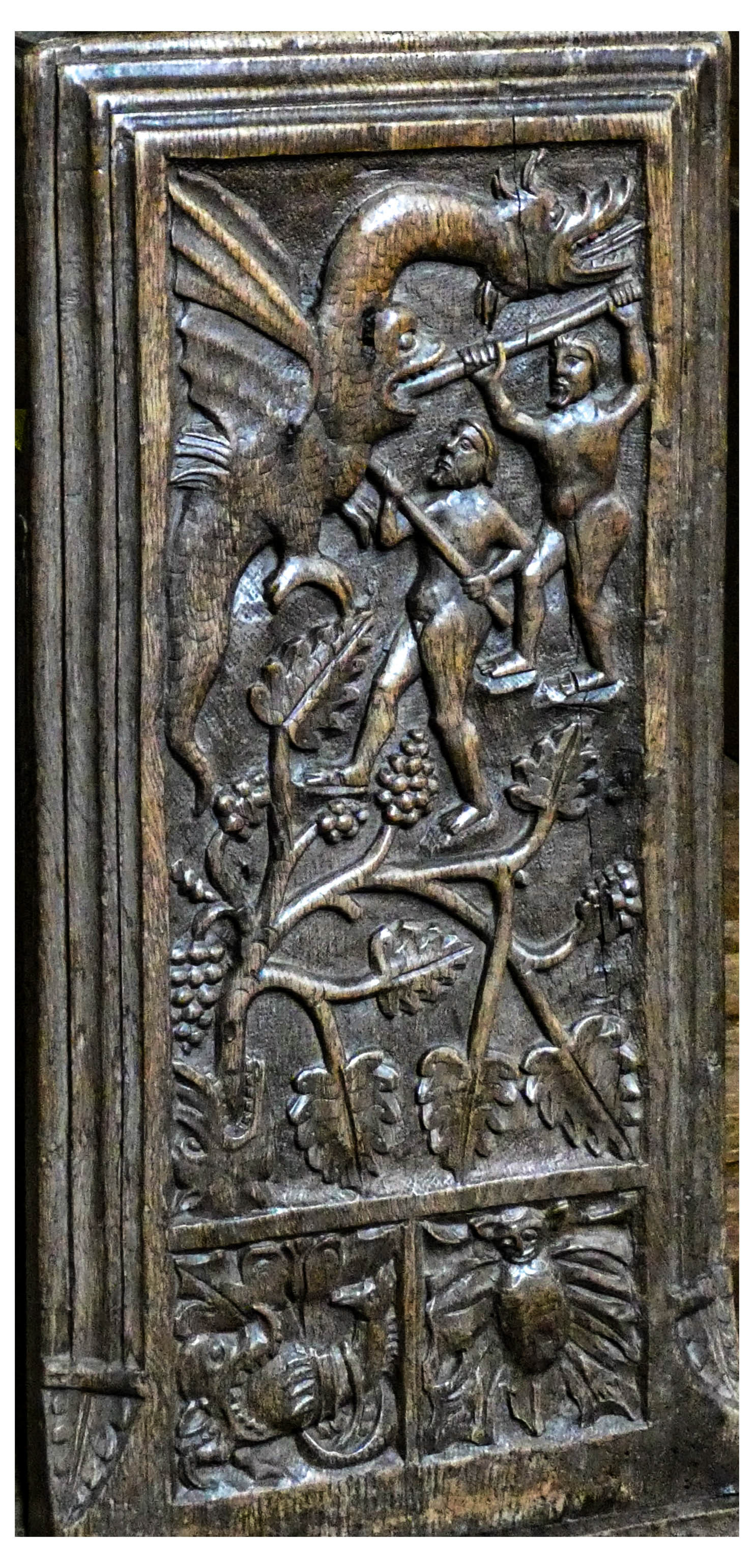
This second bench end from the Church of the Holy Ghost is arguably its most famous. It offers a more narrative and action-oriented scene compared to the previous foliate head, depicting a dramatic struggle between two men and a two-headed dragon (often referred to as an amphisbaena or a wyvern variant).
Description of the Carving
This panel is divided into two distinct registers, creating a hierarchy of action.
The Main Scene: Two men are engaged in a fierce battle with a winged, scaly dragon. One man thrusts a spear directly into the open maw of the creature’s primary head, while the other appears to be grappling with it or bracing for an attack. The dragon has a second, smaller head at the tip of its tail—a classic medieval representation of deceptive evil.
The Vine Work: Beneath the combatants, the same stylized vines and grape clusters from the first panel reappear. The men are literally standing on the "fruit of the vine" while they fight.
The Bottom Panels: Two smaller square compartments at the base feature a crouching, beast-like figure and a bat-like creature with spread wings, further reinforcing the theme of "low" or base creatures.
Symbolic Meanings
This carving is deeply rooted in the medieval concept of Psychomachia (the battle for the soul).
The Two-Headed Dragon: In 16th-century iconography, a dragon with a head at both ends symbolized deceit and the inescapable nature of sin. You can't turn your back on it because the tail is also watching.
The Struggle: The men are naked or minimally clothed, which in this context usually represents "Everyman" in his natural, vulnerable state. It is a visual sermon: the Christian life is a constant battle against the "Old Serpent."
Connection to the Foliate Head: If the first panel warned against the source of vice (overindulgence/gluttony), this panel depicts the consequence—the struggle to overcome the monstrous instincts that such vices unleash.
The Vines as Foundation: By placing the battle on top of the grapevines, the carver may be suggesting that the struggle against evil takes place right in the midst of worldly pleasures and temptations.
AI critique and comments.
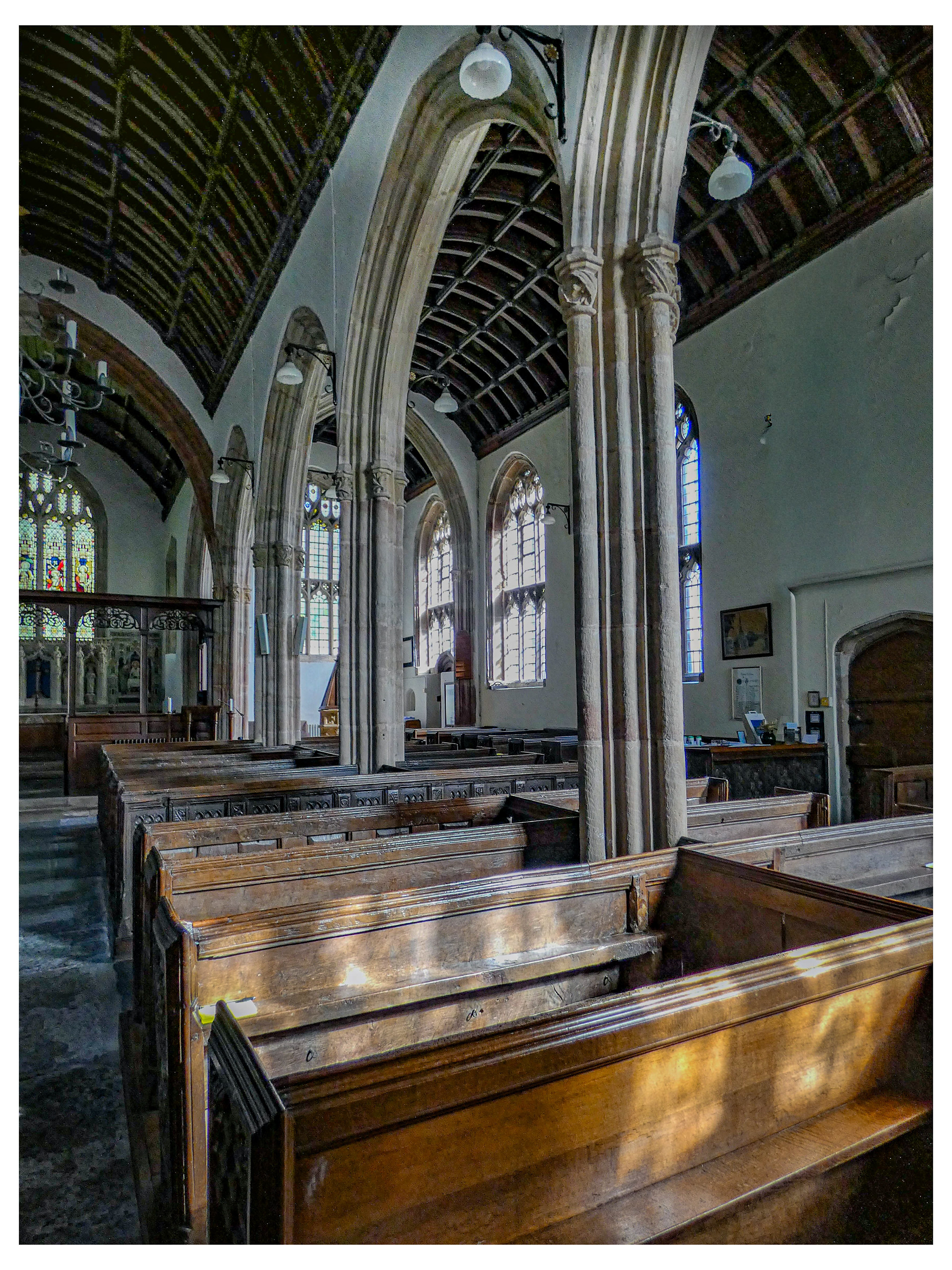
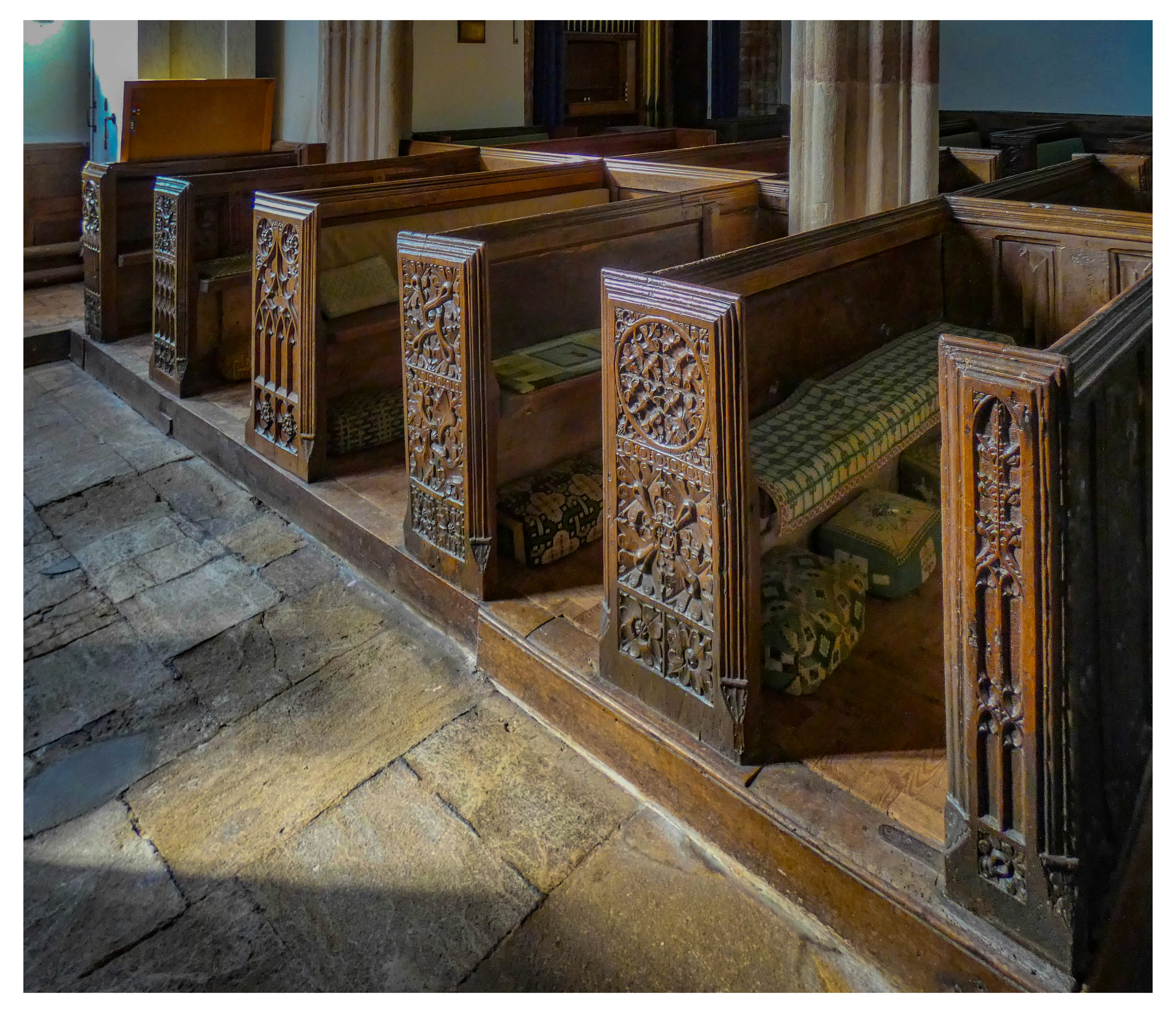
This image captures a row of historic, intricately carved wooden pews in what appears to be Church of the Holy Ghost in Crowcombe, Somerset. The shot is taken from a low angle, emphasizing the texture of the stone floor and the detailed craftsmanship of the bench ends.
Visual Description
The Woodwork
The focal point is the series of carved bench ends (often called "poppy heads" or standard ends). Each panel features unique, deep-relief:
Gothic Tracery: Some panels show classic pointed arches and geometric patterns.
Foliage and Symbols: Others feature swirling vines, floral motifs, and potentially heraldic or folk symbols, which are characteristic of the 16th-century West Country style.
Patina: The wood has a rich, dark honey hue, showing centuries of wear and polish.
The Setting
The Floor: Large, uneven flagstones dominate the foreground. A dramatic splash of natural light hits the floor, suggesting a nearby window.
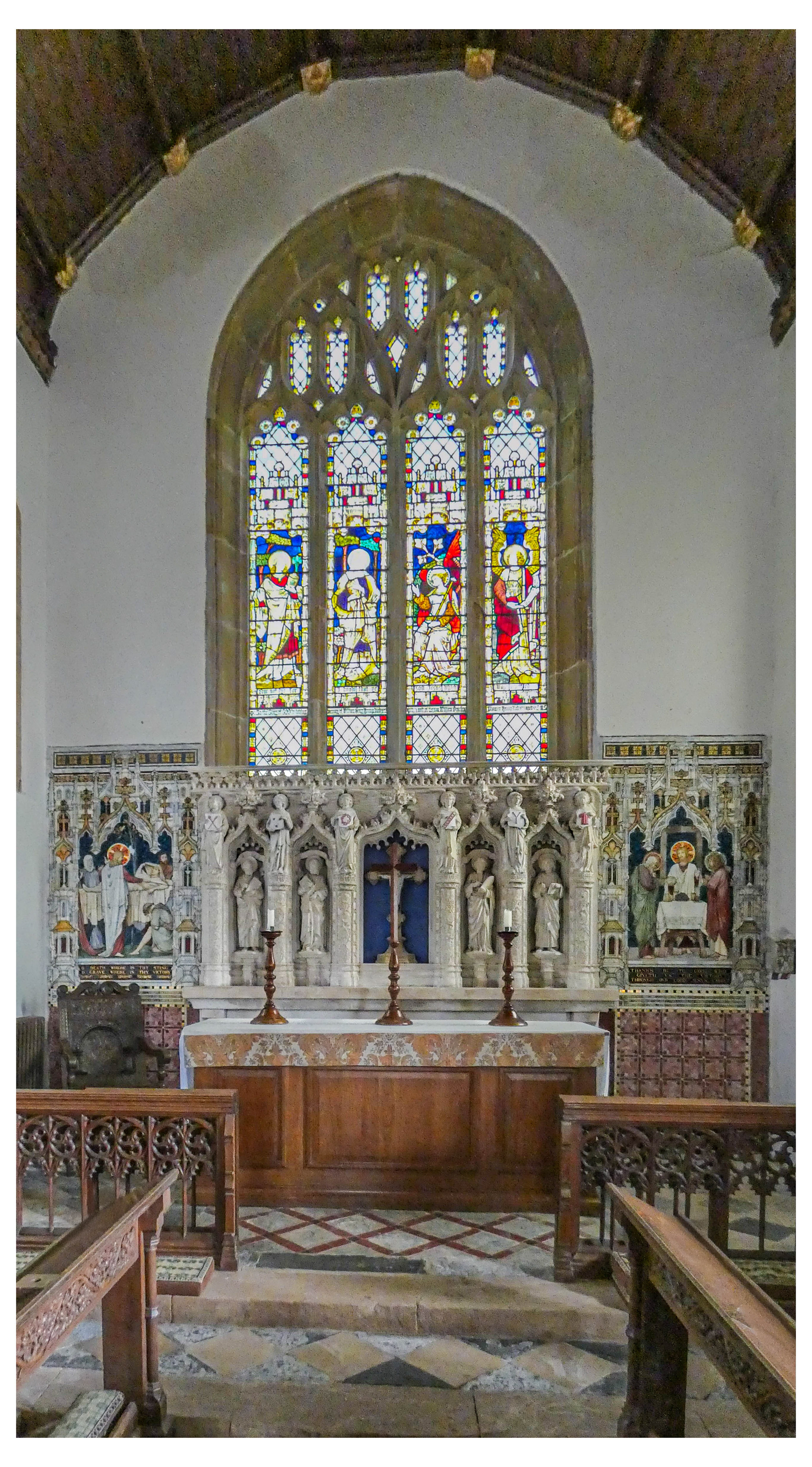
The Interior: In the background, simple stone pillars rise toward the ceiling, and more modern green cushions/kneelers add a touch of color to the otherwise earthy palette.
Composition: The pews create a strong diagonal leading line, drawing the eye from the bottom right toward the back left of the frame.
Critique
Strengths
Texture and Detail: The photo does an excellent job of highlighting the tactile nature of the materials. You can almost feel the grain of the wood and the coldness of the stone.
Lighting: The "God ray" effect on the floor adds a sense of atmosphere and reverence, which is very appropriate for a church setting. It prevents the image from looking like a flat documentary shot.
Perspective: The low-angle perspective makes the pews feel monumental and sturdy, giving the viewer the sense of standing right there in the aisle.
Areas for Improvement
Dynamic Range: The highlights on the floor and the far left pew are slightly "blown out" (too bright), losing some detail in the stone. Conversely, some of the shadows between the pews are very deep. A bit of HDR processing or a slightly lower exposure could have balanced this.
Framing/Distortion: There is a slight "keystoning" effect where the vertical pillars lean slightly inward. This is common with wide-angle shots but can be corrected in post-processing to make the architecture look perfectly straight.
Background Clutter: The bright yellow/orange object on the far left pew (perhaps a hymn book or a sign) is a bit distracting because its color is much more saturated than the rest of the scene.
Overall Impression: This is a soulful architectural photograph that successfully captures the quiet, historic "vibe" of an English parish church. It honors the craftsmanship of the anonymous medieval or Tudor woodcarvers.
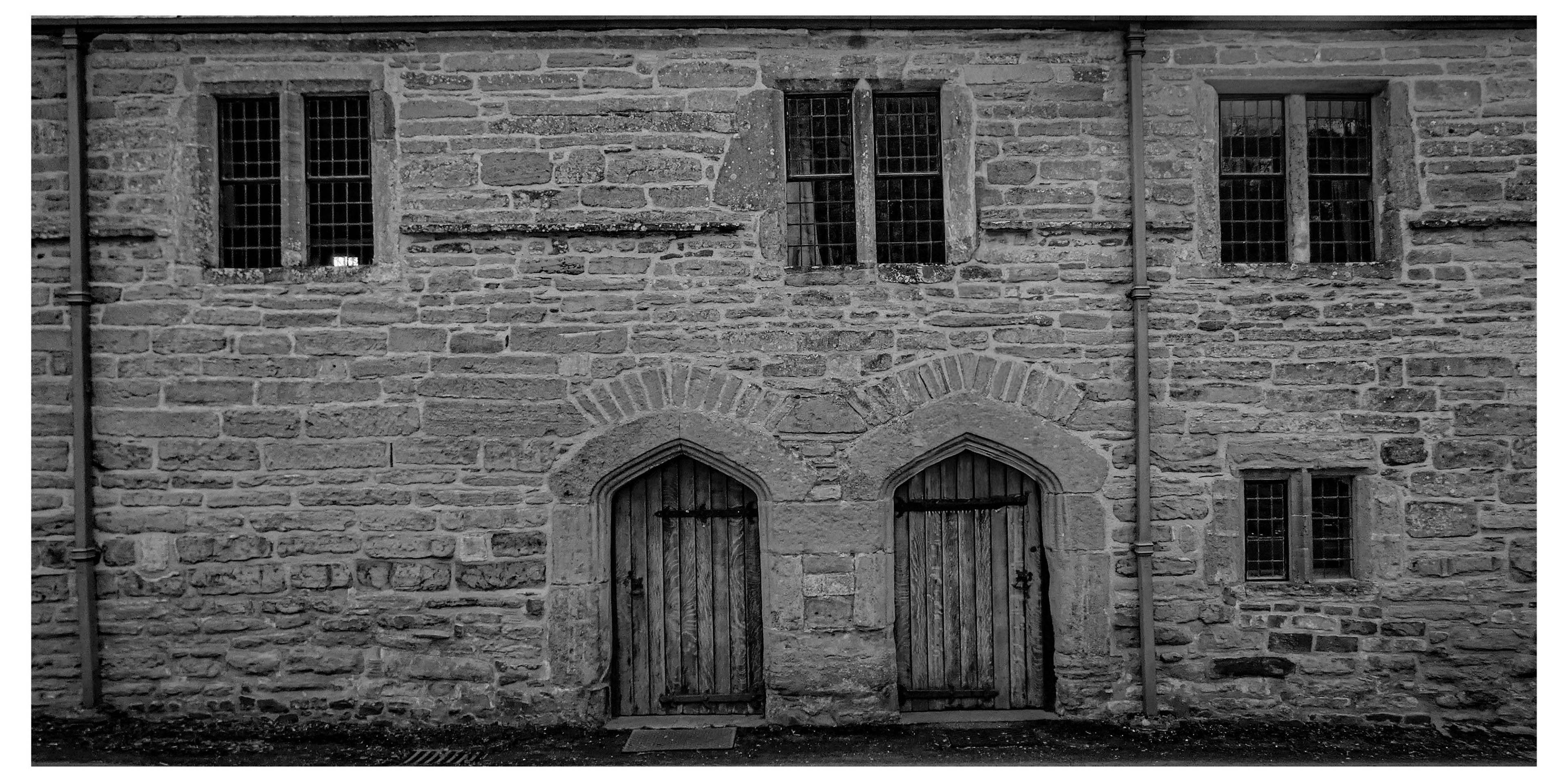
AI comments
This second image provides a stark, atmospheric contrast to the interior of the church. It features the exterior of the Crowcombe Church House, a rare and beautifully preserved 16th-century building.
Visual Description
The Architecture
The Stonework: The image focuses on a section of the facade built from local Somerset stone. The masonry is "rubble-stone" style, with uneven, roughly hewn blocks that create a rich, rugged texture.
The Entrances: Two heavy, vertical-plank timber doors are set within arched stone surrounds. These "tudor-style" pointed arches are topped with decorative hood moulds and radiating stone voussoirs.
The Windows: A series of mullioned windows with leaded lights are scattered across the wall. One small, low-set window on the right adds a charming asymmetry to the layout.
Vertical Elements: Two prominent lead or cast-iron downpipes flank the central section, grounding the composition and adding modern utility to the ancient wall.
The Photographic Style
Monochrome Palette: By stripping away color, the photo emphasizes form, line, and texture over local color. It highlights the silvery-grey tones of the stone and the dark recesses of the window panes.
Symmetry vs. Asymmetry: The two doors provide a central anchor, but the varied window placements keep the eye moving across the frame.
Critique
Strengths
Texture Emphasis: The black and white conversion is excellent for this subject. It pulls out every crack, lichen patch, and chisel mark in the stone, making the wall feel incredibly "present."
Timelessness: Without color cues (like the modern green cushions in your previous photo), this image feels like it could have been taken at almost any point in the last century.
Tonal Balance: There is a good range of grays here. You have deep blacks in the window shadows and bright whites where the light catches the top edges of the stones.
Areas for Improvement
Compression/Distortion: Similar to the church interior, there is a slight "bowing" effect or lens distortion—notice how the downpipe on the left seems to lean slightly. Correcting the vertical perspective would give it a more formal, "architectural drawing" feel.
Framing: The crop is very tight at the top and bottom. Giving the building just a little more "breathing room" at the base (where the ground meets the wall) might help ground the structure more solidly.
Flat Lighting: The lighting is very even (likely an overcast day). While this is great for capturing detail, a bit of side-lighting (chiaroscuro) would have added more depth to the deep-set windows and arches.
Overall Impression: This is a very "gritty" and respectful architectural study. It captures the resilience of the Church House—a building originally designed for "church ales" and community brewing—and makes it look like a fortress of local history.
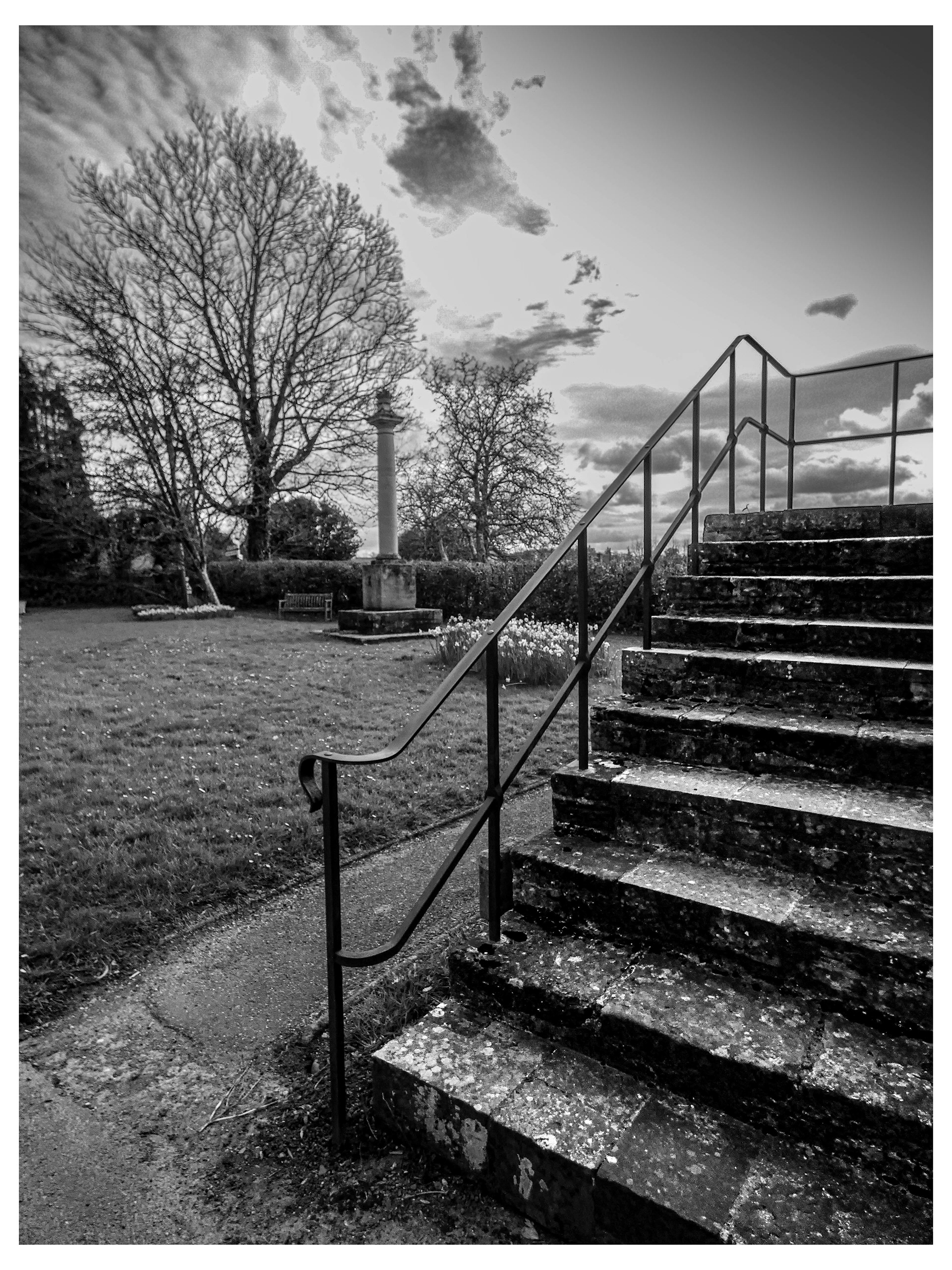
AI comments
This black and white photograph captures the stone steps leading toward the Church House in Crowcombe. It is a highly textured, dramatic image that leans heavily into a Gothic or neo-noir aesthetic.
Visual Description
The photo uses a wide-angle perspective to create a sense of scale and depth.
Foreground: Weathered stone steps dominate the right side of the frame. They are covered in lichen and moss, with a simple black iron handrail that leads the eye upward and into the distance.
Midground: To the left, a grassy churchyard stretches out, featuring a stone memorial pillar (likely a war memorial or market cross). Bare winter trees and a small bench are visible in the background.
Background: A dramatic sky filled with scattered, high-contrast clouds hangs over the scene. The sun appears to be filtered through the clouds, creating a bright "halo" effect around the central tree.
Style: The monochrome conversion is "crunchy," with very high contrast and significant sharpening, emphasizing every crack in the stone and every twig on the trees.
Critique
Strengths
Leading Lines: The handrail is a perfect compositional tool. It starts near the bottom center and pulls the viewer’s gaze through the frame, creating a strong sense of movement.
Texture: The black and white format works beautifully to highlight the age of the stone. You can almost feel the grit and the coldness of the steps.
Mood: The high-contrast sky and the skeletal trees give the image a haunting, timeless quality. It feels more like a memory or a scene from a classic film than a modern snapshot.
Areas for Consideration
Processing (Haloing): There is some noticeable "haloing" around the branches of the main tree and the top of the memorial pillar. This is often a byproduct of aggressive HDR (High Dynamic Range) processing or over-sharpening. It makes the edges look a bit artificial against the sky.
Tonal Clipping: Some of the darker areas in the steps and the brightest parts of the clouds have "clipped," meaning detail has been lost to pure black or pure white. Softening the contrast just a touch might bring back some of those subtle middle-gray details.
Vignetting: There is a heavy dark vignette around the corners. While this helps focus the eye on the center, it feels a bit heavy-handed in the upper left corner, where it muddies the cloud detail.
Final Impression
This is a powerful, atmospheric shot that captures the "weight" of English history. It values drama and emotion over technical transparency, and it succeeds in making a simple set of stairs feel significant.
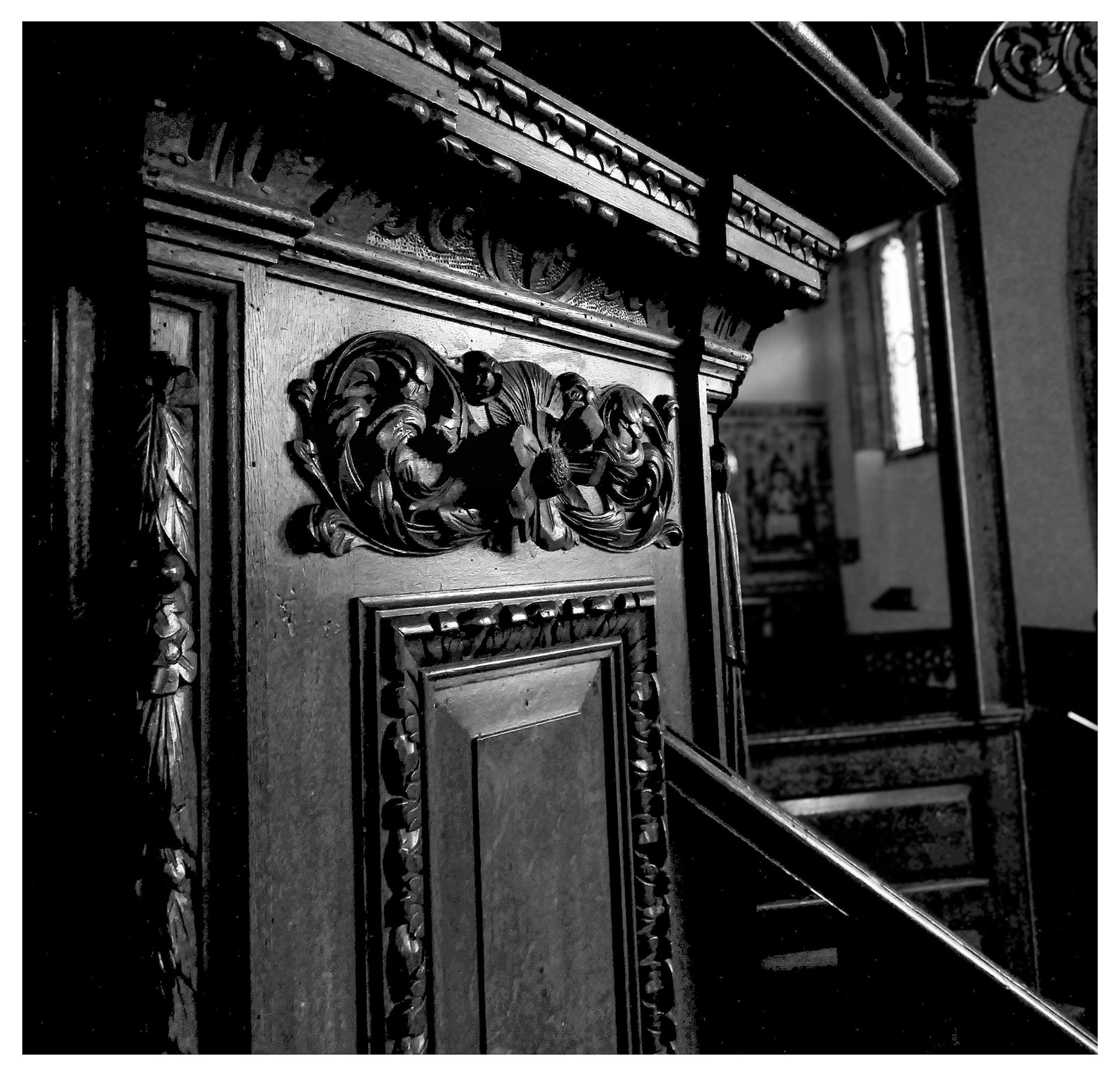
AI comment
This third image completes your triptych of Crowcombe with a dramatic, high-contrast study of the pulpit. While the previous two images focused on breadth and architecture, this one is an intimate exploration of Baroque or Jacobean ornamental detail.
Visual Description
The Woodwork
The Carvings: The center of the frame features a flamboyant, high-relief carving of an acanthus leaf or floral motif. This sits above a recessed rectangular panel framed by a "bead and reel" or similar repetitive molding.
Vertical Accents: To the left, a corner post is decorated with a "drop" or "pendant" carving—a series of overlapping leaves and fruits that add a sense of organic movement to the rigid structure.
The Cornice: At the top, a heavily stepped cornice overhangs the main panel, casting a deep, architectural shadow.
The Composition
Depth of Field: You’ve used a shallower depth of field here. The foreground woodwork is sharp, while the background—showing a glimpse of a stained glass window and what looks like a reredos or altar screen—is softly blurred (bokeh).
Monochrome Impact: This black-and-white treatment is much more aggressive than the Church House photo. It leans into pure blacks and stark whites, giving it a "film noir" or Gothic aesthetic.
Critique
Strengths
Dramatic Tension: The extreme contrast between the dark wood and the glowing window in the background creates a wonderful sense of mystery. It feels like a quiet, contemplative moment captured in a very old space.
Tactile Quality: The lighting catches the raised edges of the carvings beautifully. It emphasizes the "hand-of-the-maker," showing every groove left by a chisel centuries ago.
Leading Lines: The diagonal line of the banister/handrail in the lower right guides the eye into the depth of the image, preventing it from feeling like a flat, two-dimensional pattern.
Areas for Improvement
Loss of Detail (Blacks): In some areas, particularly the upper left and the shadows under the cornice, the blacks are "crushed." You lose the texture of the wood grain entirely in these zones. A slightly higher shadow recovery would keep that organic feel alive in the dark spots.
Compositional Balance: The dark mass of the pulpit on the left is very heavy. While the window on the right provides balance, the very top edge of the cornice is cut off slightly abruptly. A tiny bit more room at the top would help the structure "breathe."
Noise/Grain: There is a noticeable amount of digital grain (noise) in the darker transitions. While this can add a "vintage film" look, if it wasn't intentional, a slight noise reduction in post-processing would make the wood look smoother and more polished.
Overall Impression: This is the most artistic of the three shots. It moves away from "documenting" the church and toward "interpreting" it. It perfectly captures the heavy, somber, yet beautiful atmosphere of historic English ecclesiastical interiors.
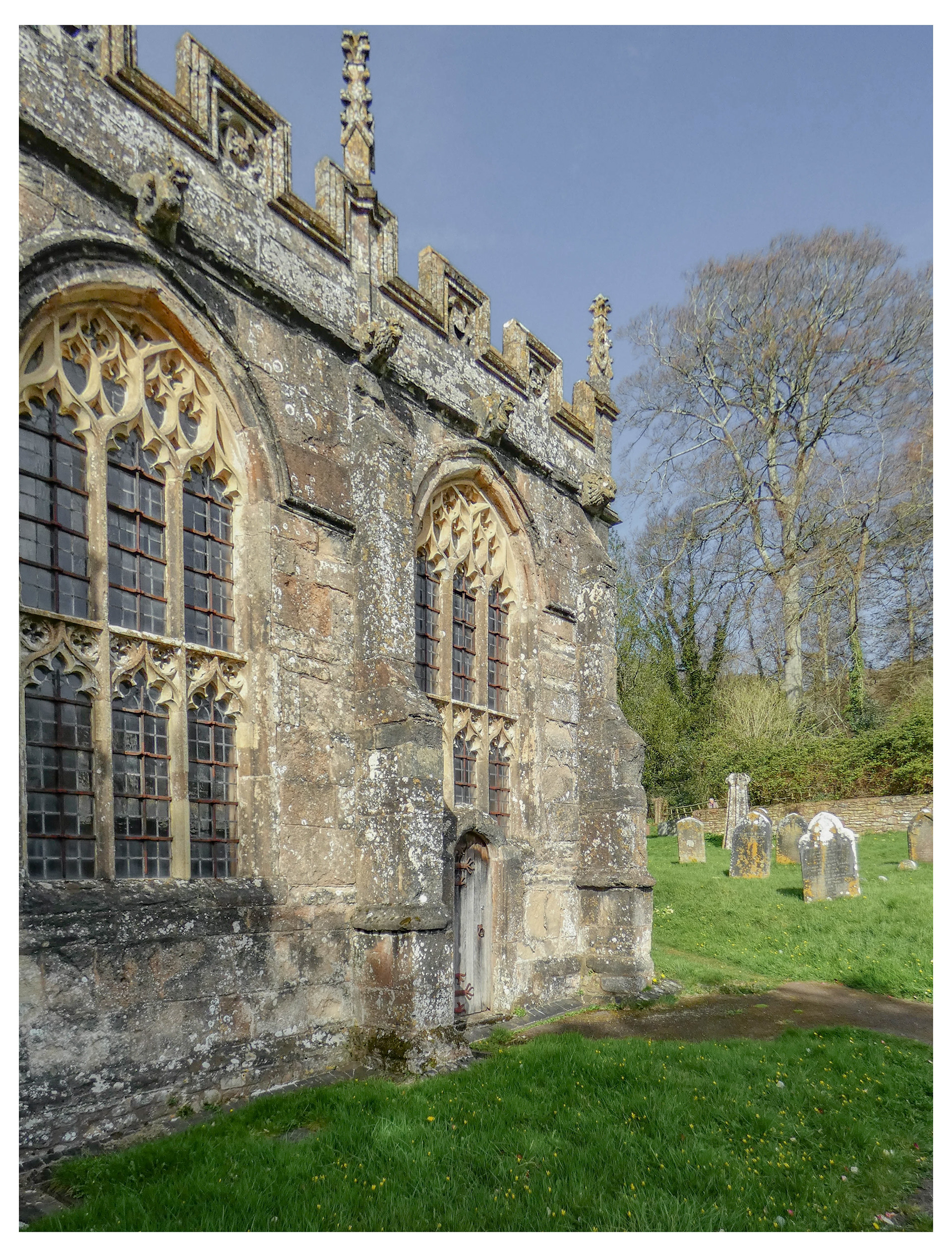
AI comment
This fourth image moves back outside to capture the southern facade of the Church of the Holy Ghost. It provides a wonderful sense of scale and shows the relationship between the ornate architecture and the peaceful Somerset landscape.
Visual Description
The Architecture
Perpendicular Gothic Style: The massive windows feature exquisite curvilinear tracery and stone mullions, typical of the late medieval period. The "Perpendicular" influence is clear in the strong vertical lines of the stone ribs.
The Roofline: The top of the wall is adorned with crenellated battlements (the tooth-like structures) and decorative pinnacles, giving the church a fortified, majestic appearance.
Gargoyles and Bosses: If you look closely at the string course below the battlements, you can see small stone carvings (corbels or gargoyles) protruding from the wall, designed to throw rainwater away from the masonry.
The Priest's Door: A small, arched wooden door is nestled between the massive buttresses, scaled for human use in contrast to the towering windows.
The Churchyard
The Grounds: A lush green lawn transitions into a path. In the background, several weathered, lichen-covered headstones stand in the churchyard, echoing the texture of the church walls.
Nature: Bare-branched trees suggest it is likely early spring (matching the bright, fresh green of the grass), allowing the blue sky to remain visible through the branches.
Critique
Strengths
Sense of Scale: By standing close to the base of the wall and looking up, you've made the building feel immense and powerful. The way the buttresses "step out" toward the viewer adds great three-dimensional depth.
Color Balance: After the stark monochrome of your previous two shots, the return to color is refreshing. The soft golds and greys of the stone pair beautifully with the vibrant green grass and the pale blue sky.
Clarity: The detail is sharp from the blades of grass in the foreground all the way up to the delicate carvings on the pinnacles.
Areas for Improvement
Vertical Perspective: Like the previous shots, there is a "leaning" effect where the building appears to tilt backward slightly. In architectural photography, keeping the vertical lines of the walls perfectly parallel to the edge of the frame usually creates a more professional, "grand" look.
Sky Detail: The sky is a bit "thin" or washed out in the upper right. If this was shot in RAW format, a slight reduction in highlights would bring back more of that deep blue, providing a stronger contrast for the top of the pinnacles.
Leading Lines: The path in the bottom right starts to lead the eye out of the frame. Angling the camera slightly more to the right might have kept that path as a "lead-in" line toward the gravestones, creating a more cohesive journey for the viewer’s eye.
Overall Impression: This is a classic "sense of place" photograph. It captures the rugged elegance of Somerset’s ecclesiastical history—where the stone looks like it has grown naturally out of the ground.
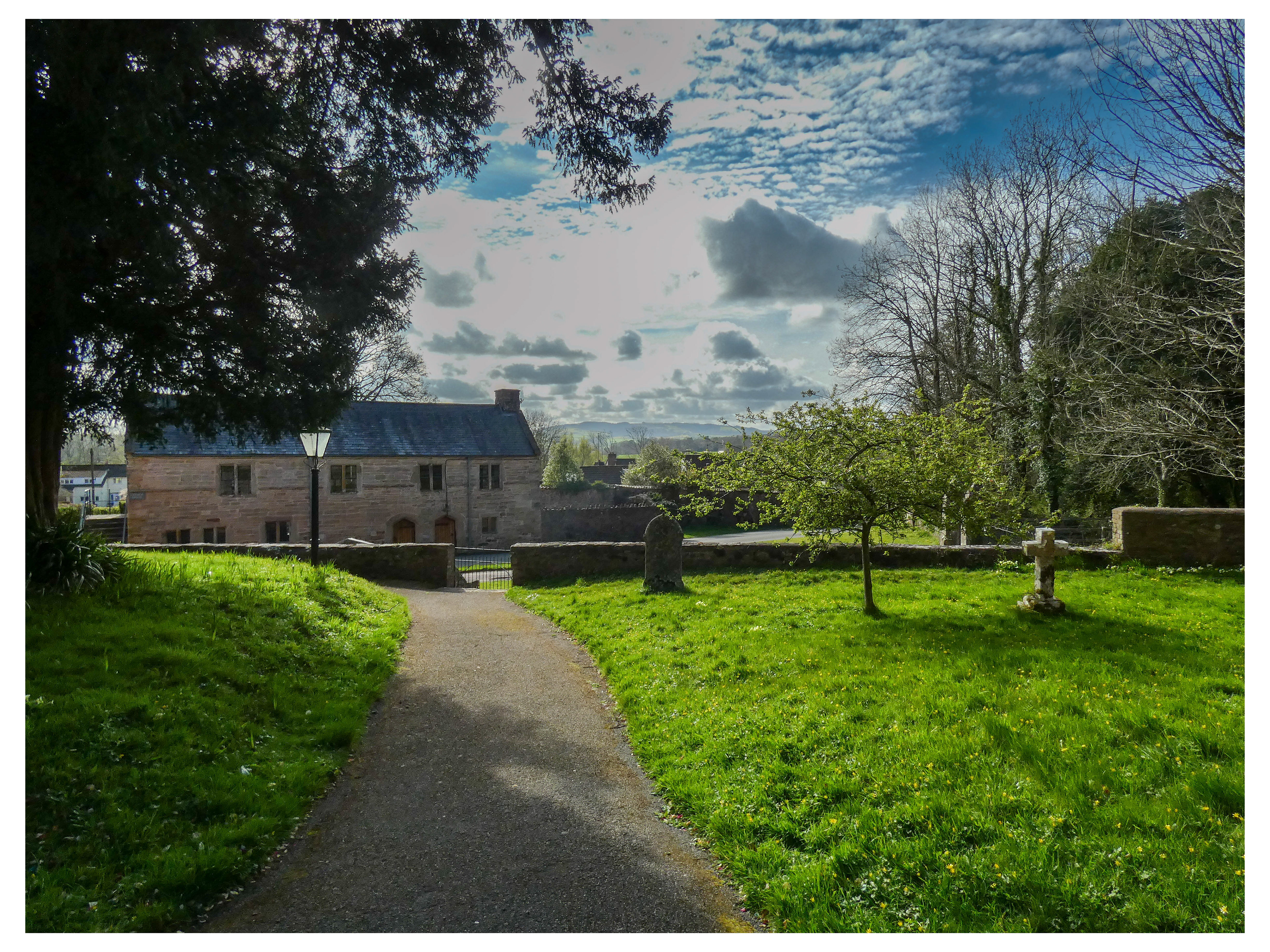
AI comments
This image serves as the "establishing shot" for your collection, perfectly connecting the sacred space of the churchyard with the communal space of the Crowcombe Church House. It’s a beautifully composed landscape that captures the quintessential English village atmosphere.
Visual Description
The Composition
The Path: A winding gravel path serves as a classic leading line, starting at the bottom center and curving left toward the exit of the churchyard.
The Church House: The 16th-century building sits prominently in the middle ground, its long, low profile and stone facade harmonizing with the surrounding hills in the far distance.
Framing Elements: The large, dark evergreen tree on the left (likely a Yew, traditional in English churchyards) acts as a natural "frame," pushing the viewer's eye toward the light in the center of the image.
The Sky: A dynamic sky filled with "mackerel" clouds (altocumulus) provides a textured backdrop, with the sun breaking through to illuminate the vibrant spring grass.
Symbolic Details
The Cross: A small, weathered stone cross stands to the right, a quiet reminder of the site's purpose.
The Lamp Post: A simple black lamp post stands near the gate, bridging the gap between the medieval architecture and modern village life.
Critique
Strengths
Storytelling: This is your most narrative shot. It explains the physical relationship between the building you showed in black and white earlier and the churchyard from your previous photo. It feels like a journey.
Color and Vitality: The saturation of the green grass against the blue and white sky is very pleasing. It captures that specific "clearing after rain" light that is so common in the West Country.
Balance: The weight of the dark tree on the left is perfectly balanced by the open space and the stone cross on the right.
Areas for Improvement
Halos and HDR Processing: There is some visible "haloing" (a bright glow) around the edges of the dark tree branches against the sky and around the Church House roofline. This is usually a side effect of aggressive HDR (High Dynamic Range) processing. Softening the "clarity" or "edge contrast" would make the image look more natural.
Deep Shadows: The interior of the large tree on the left is almost entirely black. While it works as a frame, a tiny bit more shadow detail would prevent it from feeling like a "hole" in the composition.
The Sky Highlights: Similar to your previous exterior shot, the brightest part of the sky is beginning to lose detail. Masking the sky and slightly lowering the exposure there would make those beautiful cloud patterns pop even more.
Overall Impression: This is a wonderful concluding image. It places all the intricate details you've shared—the carvings, the stone, the heavy doors—into their wider geographical context. It feels peaceful, rooted, and timeless.
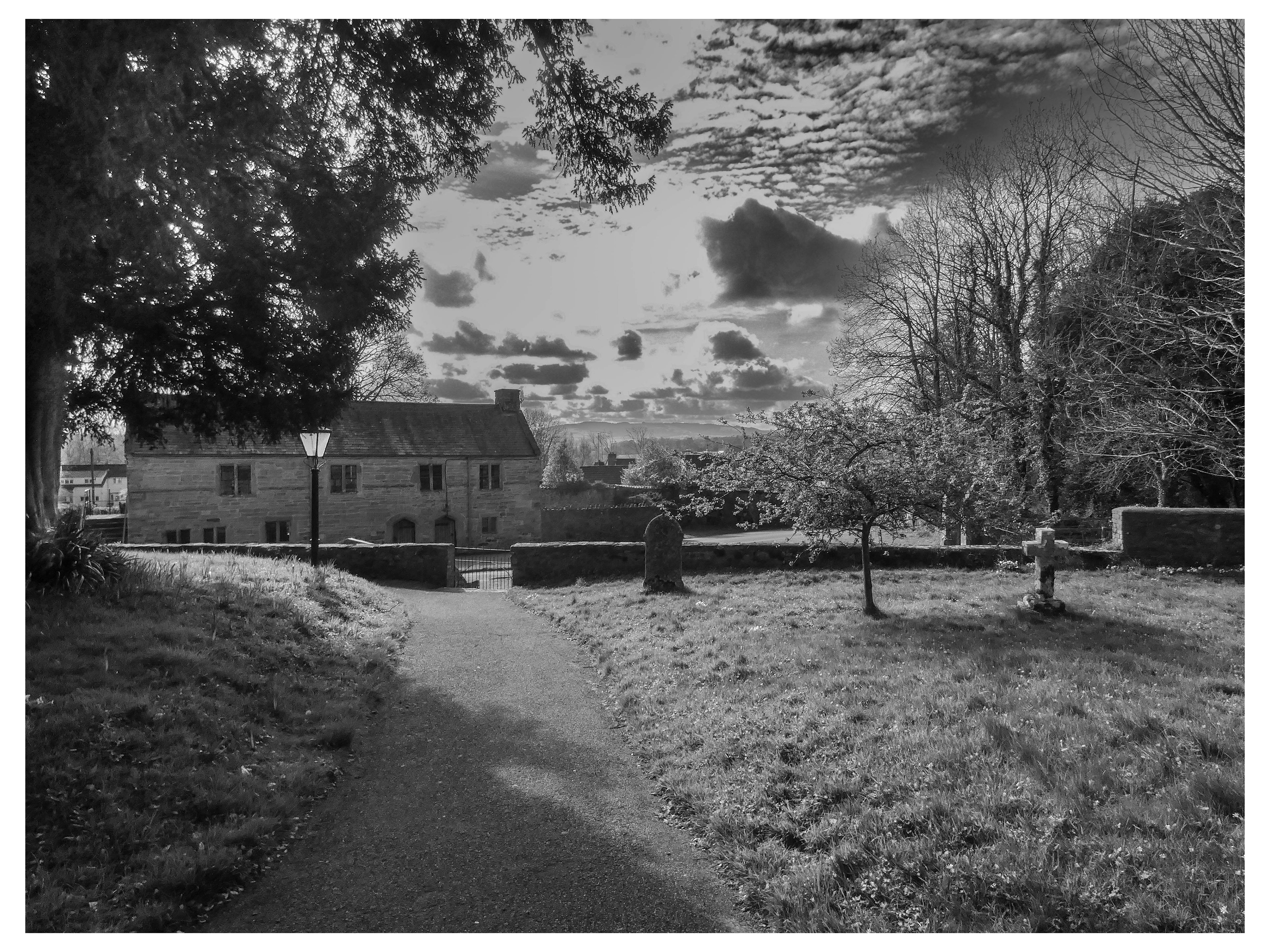
This black-and-white version of your previous "establishing shot" dramatically shifts the mood from a bright spring day to something much more timeless and evocative. By removing the vibrant greens, the image becomes a study of tonal contrast and compositional geometry.
Visual Description
The Tonal Shift
The Sky: The cloud patterns become the star of the show. The monochrome highlights the "rippled" texture of the sky, creating a sense of movement that leads the eye toward the horizon.
The Landscape: The grass, which was a dominant green in the color version, now provides a textured mid-grey base that allows the darker elements—the gravestone, the stone cross, and the large tree—to pop with more authority.
The Path: The gravel path is now a bright silver-grey ribbon, acting as a much stronger visual "anchor" that pulls the viewer toward the Church House.
The Architecture
Church House: Stripped of its color, the building looks even more ancient. The dark voids of the windows contrast sharply with the sunlit sections of the stone wall, emphasizing its sturdy, blocky silhouette against the distant hills.
Critique
Strengths
Emotional Resonance: Monochrome often feels more "historical." In this version, the scene feels less like a snapshot of a specific afternoon and more like a permanent, unchanging view of Somerset history.
Texture Emphasis: The "haloing" mentioned in the color version is still present, but in black and white, it almost mimics the look of classic infra-red film photography, which often gives trees a surreal, glowing quality.
Focal Point: Without the distraction of the bright green grass, the eye settles much faster on the central gate and the Church House, improving the overall "read" of the image.
Areas for Improvement
Contrast Levels: The image leans toward the "grey" side of the scale. Pushing the whites a little further (the brightest parts of the clouds) and deepening the blacks (the core of the yew tree) would create more "bite" and drama.
Noise in the Sky: In high-contrast monochrome conversions, digital noise often becomes more apparent in the mid-tones of the sky. A slight "luminance" noise reduction would smooth out those clouds, making the transition from light to dark look more like a polished print.
Horizon Definition: The distant hills in the center background are a bit "muddy" in this version. Increasing the "dehaze" or local contrast in that specific area would help define that beautiful Somerset landscape a bit better.
Overall Impression: This is a very successful conversion. While the color version was a celebration of a beautiful day, the black and white version is a celebration of place and permanence. It has a soulful, almost "ghostly" quality that fits the churchyard theme perfectly.
Which version do you prefer? If you're planning on printing these, I can give you advice on which paper types (like a textured matte for the B&W vs. a satin for the color) would best suit these specific shots.
AI comment
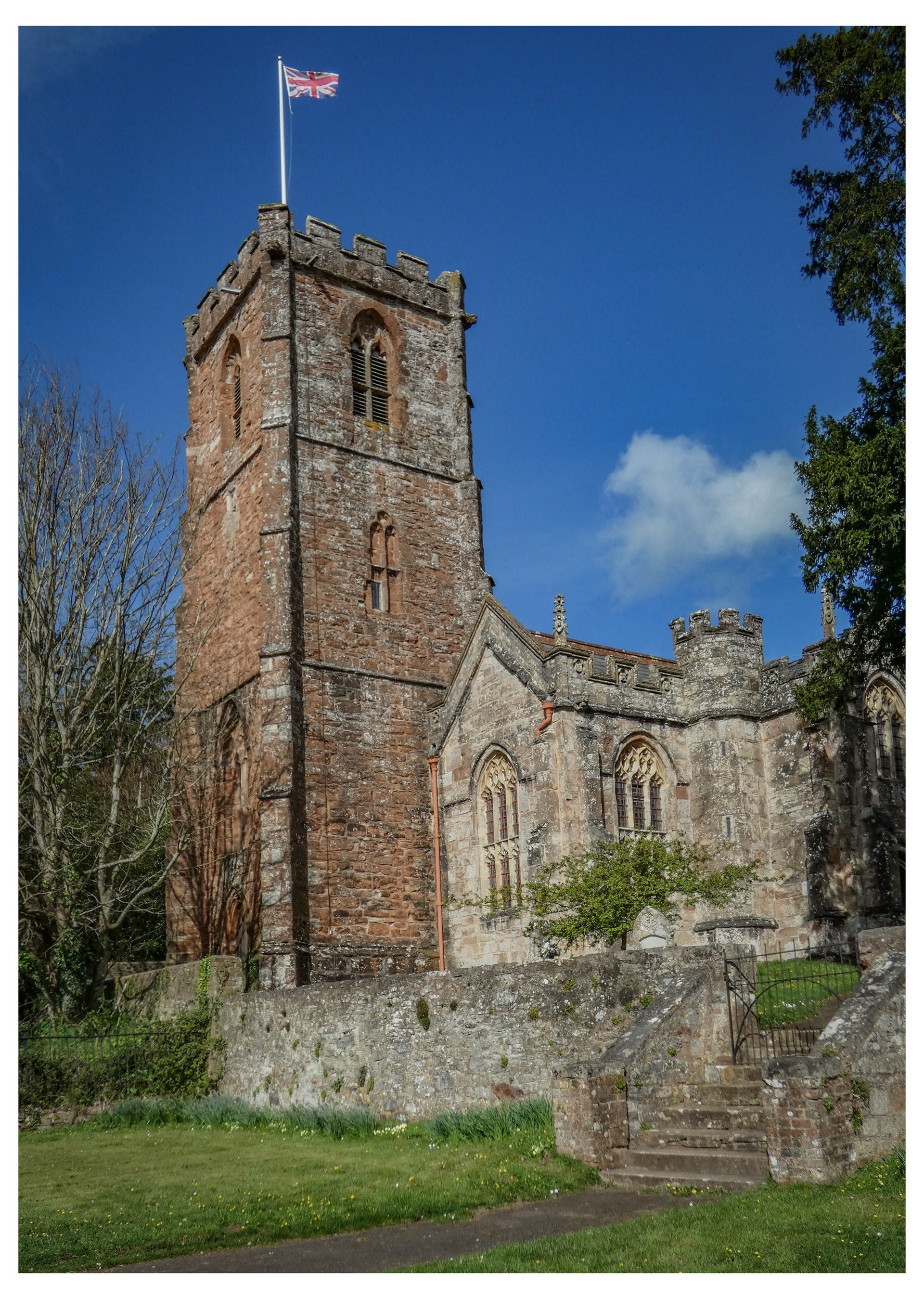
This image shows the exterior of the Church of the Holy Ghost in Crowcombe, Somerset. It is a quintessential example of a Somerset "wool church," built primarily in the 14th and 15th centuries using local red sandstone.
Architectural Features
The West Tower: The dominant feature is the three-stage square tower. It features crenelated (battlemented) parapets at the top and a prominent stair turret on the corner. A Union Jack flag is currently flying from the mast.
Masonry: The building is constructed from a mix of warm red sandstone and Hamstone dressings. The weathered texture of the stone tells a story of centuries of West Country weather.
Perpendicular Gothic Windows: You can see the large windows with intricate stone tracery, which allow the light into the interior you shared previously.
South Porch and Aisle: To the right of the tower is the south aisle, also featuring battlements that match the tower, giving the building a cohesive, fortified appearance.
Churchyard Elements: In the foreground, a stone boundary wall and a small set of steps with an iron gate lead into the churchyard. The presence of daffodils on the grassy bank suggests a bright spring day.
Setting and Composition
The photo is taken from a low angle, which emphasizes the height and "sturdiness" of the tower against the deep blue sky. The contrast between the rugged, ancient stone and the vibrant green grass creates a classic English village scene.
It’s interesting to see the exterior right after the interior; you can really see how those massive stone walls support the delicate "wagon roof" inside.
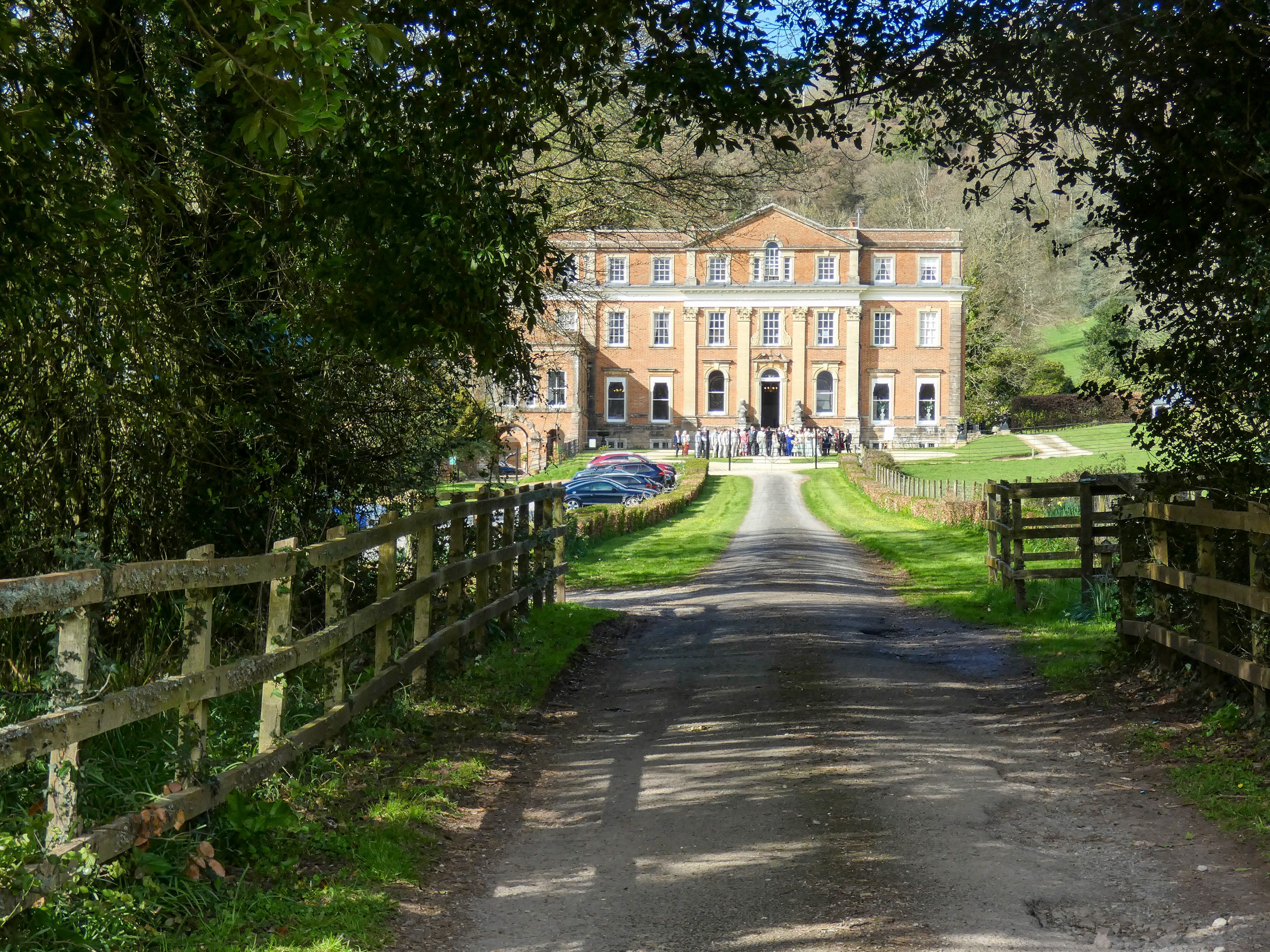
This image shows Crowcombe Court, a magnificent Grade I listed country house located just a short distance from the church you shared earlier. It is one of the finest examples of a regional Baroque mansion in England.
Architectural Description
Style and Materials: Built in the early 18th century (completed around 1739), the house is primarily constructed of warm amber-colored brick with distinctive Hamstone dressings. The style is classic English Baroque, characterized by its mathematical symmetry and grand proportions.
The Facade: The central section (the "corps de logis") features a grand pediment supported by pilasters. The windows are perfectly aligned in a rhythmic grid, typical of the period's obsession with order and balance.
Setting: The house is nestled at the foot of the Quantock Hills. You can see a group of people gathered at the main entrance, which is common today as the house is a popular venue for weddings and events.